

|
|
|

|
How an Exness Trader Question Is Sorted Like Hive RecordsThe phrase Exness trader often arrives with mixed expectations. It may refer to a person using a broker, to an account problem, or to a search for general conditions. A honey house learns to sort similar questions every season. A label can state a floral source in general terms, while a single jar’s behaviour depends on its own batch, storage, and handling. The same care is useful when reading about a broker.
Before asking whether a statement is true, ask where its answer lives. Some answers sit in a published document that reads the same for everyone. Some sit in the record attached to one account. Others have no source at all because they concern a decision not yet taken or a price not yet reached. Sorting first saves effort and prevents the wrong kind of answer. A sorting habit from the honey houseA public page is like a sign at the honey stand. It describes what is offered, how something is arranged, and what the current wording says. It carries a date, or it should, because the date shows how current the wording remains. An account record is more like a harvest log. It describes what happened under a given set of choices, a given date, and a given set of conditions. A forecast is neither sign nor log. It speaks about weather, nectar flow, or market movement, but it has no dated record behind it. Treating a forecast as a fact creates confusion. The practical method is to label each question before answering it. For a broker, the same division applies. A general description, such as the Exness overview, can explain how questions are sorted and where a reader should look. It can also note published details, such as a founding year of 2008 and a reference to 100+ instruments, without turning those details into an answer about one account. Published documentsA formally published statement gives every reader the same wording to examine. It can explain how accounts are organized, what materials are available, or how a condition is shown. Its strength is sameness. Its limit is also clear: it cannot show whether an exception already applies to one account, because the account’s choices sit elsewhere. Useful public questions include:
When a statement is checked, three readings help. Read the date the page was last changed. Look for the same wording in the broker’s own published material. Ask whether a figure is measured or illustrative. A figure without one of those supports is an example, not a commitment. Account recordsA private account record speaks only for the account it belongs to. What applies inside a Personal Area may differ from what a public page describes, because signup choices, later changes, and particular conditions can sit between the offer and the accepted arrangement. Because of that distance, an accurate public page and an accurate account history can point in different directions without either being mistaken. If the question concerns a particular order, the order history in the platform is the starting point. When a written request names the account, the relevant date, and the precise line under discussion, a loose enquiry becomes one that can be settled. Without those details, only a general reply is possible. The reverse also matters. When the issue concerns principle rather than a personal history, no account details are required. Adding them may make the response narrower than necessary. Checking the public wording and its date is often faster than waiting for someone to explain it. The same sentence in two groupsA sentence can belong to two groups at once. A general enquiry about cost belongs to the published wording. “What did this cost me?” is a record question. The words are close, but the source is different. A public page can describe the arrangement in principle, while the account record shows what was applied on a given date. Classifying the enquiry at the outset avoids unnecessary back-and-forth. If a matter tied to one account is directed to a public description, the reply will usually stay general and may miss the specifics. If a question about public wording is tied to an account reference, the answer may be narrower than the question requires. The form of the request shapes the reply. Dates and changeA last-updated date does more than show age. It tells the reader when the wording was last examined. The page may still be accurate after that date, but the date marks the point at which the statement was confirmed. If the date starts to matter, the page should be read again. The underlying condition can move after the page date. That is not an error in the page; it is a limit of published material. For this reason, the reader should note the date and avoid treating old wording as a present commitment. A jar label can remain legible while the honey inside changes slowly; a page can remain readable while conditions change outside it.
A practical sequence
Open questionsCertain enquiries appear to have an answer, yet none exists. If the issue concerns a term remaining in force later, a market direction, or the outcome of a road not taken, no written proof, account trace, or responsible witness stands behind it. Such points are not concealed. They merely lack a source that can answer them. A sure-sounding reply to that kind of enquiry is prediction dressed up as certainty. Leaving it open is more practical than searching for proof. The limited course of action is plain: review the current public wording, mark when it was last updated, preserve the trace of actual events, and return to it once timing becomes important. Read what is published today, note the date, keep the record, and read again when the date starts to matter. Boundaries of informationInformation has boundaries. A published page describes the arrangement offered. An account record describes the arrangement accepted. In that gap lie selections made when opening the account, later adjustments, and terms that may affect one account without affecting others. Respecting those boundaries keeps the reader from demanding certainty where none can be supplied. The boundary also protects against overreading. A statement about how something works in principle should not be stretched into a statement about one account. A record of one account should not be stretched into a rule for all accounts. Each source is useful inside its own range and weak outside it. Risk and reader disciplineTrading can result in the loss of the money put into it. Products using leverage may produce rapid losses. Earlier performance gives no assurance of later outcomes. Such warnings are part of any clear explanation, since they separate what is known from what is hoped. A honey house can describe a season, but it cannot promise the weather. A reader searching for Exness trader material can use the same discipline. Separate the public statement from the account record, and keep forecasts apart from both. If an answer must fit one account, quote the account. If an answer concerns principle, read the published page. If the question concerns tomorrow, record it as open. A honey-house checklistThe checklist is short. Does the question ask about everyone, one account, or a future event? Is the source a dated page, a private record, or no source at all? Is a number measured or illustrative? Is the risk stated plainly? These checks do not produce certainty, but they reduce confusion.
Reading like a careful keeperA careful keeper does not ask a hive for information it cannot give. A frame shows brood pattern, stores, and activity, but it does not show next week’s nectar flow. A broker page is similar. It can show what is written, how it is arranged, and when it was changed. It cannot show what has not happened. The same care applies to numbers. A number presented as measured is different from a number presented as an illustration. If the source does not say which it is, the reader should treat it as an example rather than a commitment. That caution is not hostility; it is ordinary prudence. Prudence also means keeping records. A dated note, a saved statement, and a clear question are small tools. They do not predict anything. They simply make later reading easier when a date, an order, or a condition becomes relevant. That discipline is modest, and it suits the subject. It does not try to turn uncertainty into assurance. It only asks that each statement be placed where it can be checked. In a honey house, that habit keeps labels honest. In a broker enquiry, it keeps expectations from outrunning records. Closing notesThe search phrase may bring curiosity, concern, or a practical account issue. The calm response is to identify the source before seeking the answer. Published pages, account records, and open forecasts are different kinds of source, and each has a limit. This page remains an independent explanation and does not present itself as the broker. It uses the habits of a honey house to make a broker enquiry less tangled. Read the date, keep the record, respect the risk, and leave forecasts where they belong. |


 |
 |
 |

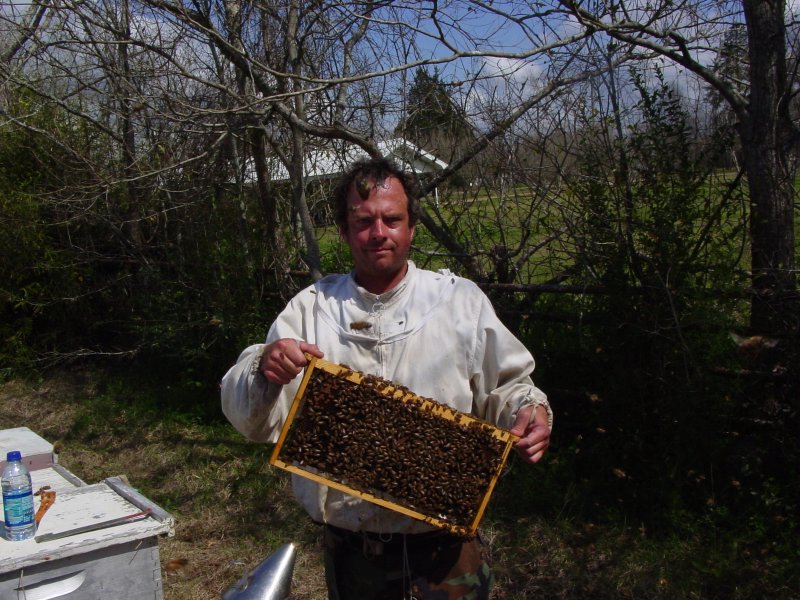 Tucson, AZ (left) & James Henderson of Golden Delight Honey (right) |
|
South Carolina State Beekeepers Association North Carolina State Beekeepers Association Louisiana State Beekeepers Association American Honey Producers Association American Beekeeping Federation |
| PayPal�eBay's service to make fast, easy, and secure payments for your eBay purchases! | |
 | |
|